Falling out of love with your partner: can it come back?
You still like them, you share a home and a past, and the spark has gone flat. What that usually means, and what tends to bring closeness back.
The short answer
Often it can. The dizzy early phase fades for nearly every couple, but strong romantic love after ten or more years of marriage is far from rare. New, exciting things done together help, and small daily contact seems to as well, unless the flatness really comes from stress, low mood or an old hurt.
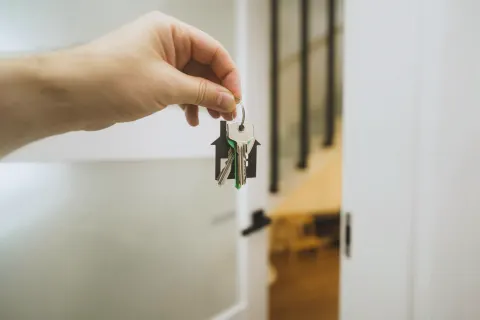
You still like your partner. You’d still choose them to sit next to at a wedding, you know how they take their coffee, and if anything happened to them you’d fall apart. But when they walk into the room, nothing lifts. The goodbye kiss has become a habit, like checking you’ve got your keys. At some point you typed “falling out of love with my husband”, or wife, or partner, into a search bar, and then felt guilty for typing it.
The dizzy, can’t-stop-thinking-about-them stage fades for nearly everyone, and on its own it says little about your future. The fuller kind of romantic love, with desire and real interest in each other, can last well past the early years, and couples have raised it again in trials. When researchers asked a random sample of married Americans, 4 in 10 of those married more than ten years said they were very intensely in love.1 In a second sample from New York, it was about 3 in 10.
Those long-married people had a few things in common. They thought well of their partner and thought about them when apart. They were affectionate and still had sex. They did new and challenging things together, and they were fairly happy with life in general.1 The last one is easy to overlook when it’s your partner you feel flat about.
What fades, and what can stay
Early love has an anxious, obsessive edge: checking your phone for their message, replaying what they said, feeling a jolt when they’re late. Two American researchers who reviewed the evidence describe this edge as typical of the early stage. What they found in long marriages is romantic love without the anxiety: strong feeling, being wrapped up in each other, and wanting each other.2
When they pooled 25 studies, that calmer romantic love went with happier relationships, both short and long ones. The anxious edge was different: early on it went with feeling happier, but in long relationships it went with feeling less happy.2 So missing the butterflies is normal, and getting them back isn’t really the goal.
It also helps to know where you are on the usual curve. One research team brought together 165 sets of data covering more than 165,000 people. On average, satisfaction with a relationship fell over the first ten years, hit its lowest point around year ten, rose until about year twenty, then dipped again. By age, the low point fell at around 40, and whether a couple had children made a difference too.3 If you’re ten years in and around 40, you’re sitting near the bottom of the average curve, and on both counts the average climbed again after that low point.

Which of these sounds like you?
- Nothing’s wrong between you, it’s just flat
- Everything feels flat, not only your partner
- There’s something you haven’t got over
- You think it’s gone for good
Nothing’s wrong between you, it’s just flat
Boredom is one of the most common reasons, and one of the easiest to work on. One American research team ran a newspaper questionnaire and a door-to-door survey and found that couples who did more exciting things together were happier with each other. Much of the link ran through boredom: couples who did fewer exciting things together were more bored with the relationship, and less satisfied.4
The same team then brought couples into a lab and gave them a short task to do together. Couples given something new and slightly exciting came out feeling better about their relationship than couples given something dull, even after only seven minutes.4 Researchers rating videos of the couples talking could see the difference too.
A later trial tried this at home. Just over 100 couples were split by chance into two groups. One group got ideas for exciting things to do together and was asked to spend 90 minutes a week on them for four weeks; the other waited. The first group ended up feeling more excited about each other and more satisfied, and four months later they were still above where they’d started.5
“Exciting” here means new to both of you, a little challenging, and something you do side by side. A restaurant you always go to doesn’t count. A cooking class, a hike on a route you don’t know, learning to dance badly together, or a weekend somewhere neither of you has been all count.
Small daily moments count as well. In one study, 49 newlywed couples were filmed over a ten-minute dinner and during a 15-minute talk about a disagreement. Couples who were more playful and enthusiastic with each other over dinner brought more humour and affection into the disagreement.6 It was a small study and can’t prove cause, as the researchers say themselves. Their reading is that small everyday moments, like how you greet each other or answer a passing comment, lay the ground for the bigger conversations.
Everything feels flat, not only your partner
Ask yourself one plain question: is it only your partner who leaves you cold, or is it nearly everything? Your hobbies, your friends, music you used to love, food, sex in general?
Losing interest across the board is one of the main signs of depression. The NHS lists “having no motivation or interest in things”, “not getting any enjoyment out of life”, “low sex drive” and “feeling irritable and intolerant of others” among its symptoms.7 When your mood drops, the person closest to you is where you’ll notice it first, because they’re the one you see every day. The feeling can look like “I don’t love them any more” when it’s closer to “I can’t feel much of anything”.
Stress from outside the relationship can do something similar. Two American researchers followed married couples through their first four years of marriage. Stress from outside, at work or with money for example, went with a worse course for the marriage, partly because stress made people see the everyday parts of their relationship in a worse light.8
One rough check is a good week away. If the feeling for your partner comes back a little on holiday, or after a stressful project ends, that’s a hint stress is doing part of the damage. That’s worth knowing before you decide anything about the relationship itself.
There’s something you haven’t got over
Sometimes the love didn’t simply fade. Something happened: a promise broken, a remark that never got taken back, years of doing more than your share at home, a time you needed them and they weren’t there. Resentment rarely announces itself. It tends to show up as coolness, as not wanting to be touched, as a flat “fine”.
An American researcher interviewed eight people who had fallen out of love with their husband or wife. They described a gradual slide rather than a sudden drop, and along the way they lost trust, closeness and the feeling of being loved. Each of them could name the moment they knew it had gone.9 Eight people can’t tell you how common that is. In their accounts, though, the love wore away as trust and closeness went, rather than vanishing overnight.
If this sounds like you, novelty and date nights probably won’t fix it on their own. The hurt needs saying out loud, plainly and once, without a list of everything else they’ve ever done.
You think it’s gone for good
Some loves do end, and no study can tell you whether yours has. What the research can say is that a dip around ten years in is common, and that on average satisfaction rises again after it.3 Heavy stress from outside can drag your view of the marriage down too.8 And people who are still intensely in love after more than ten years of marriage tend to share certain habits.1
If you’ve given it a fair try, dealt with the stress, said the hard thing, and still feel nothing, that’s real information too. Staying and leaving are both decisions adults make, and neither is a failure of character.
Passion fades but friendship grows? Not always
Researchers long assumed that passion wears off fairly quickly, while the warm, friendly kind of love holds steady or even grows. One team tested this with 53 newlywed couples, interviewed soon after the wedding and again a year later, and with 240 women aged 50 and over who had been married for many years, typically around 33.
In both groups, time wore love down, and to the researchers’ surprise it wore down the friendly kind about as much as the passionate kind.10 The comfortable side of a long relationship needs looking after too.
How to talk about it
“I don’t think I’m in love with you any more” is one of the hardest sentences to hear, and it tends to end the conversation rather than start one. You don’t need to have worked out the whole answer before you speak.
- Pick a calm, unhurried moment, not straight after a row.
- Start with what you miss. “I miss how we used to laugh together” gives your partner something to say yes to.
- Say what you’ve noticed in yourself, not what they’ve done wrong. “I’ve felt flat for months, and I don’t fully know why” is honest without being an accusation.
- If there’s an old hurt, name it once, as one specific thing.
- Ask how it’s been for them. They may have felt the drift too and been waiting for someone to mention it.
- End with one concrete thing to try together in the next fortnight, something neither of you has done before.
What to try in the next month
- Book one new thing a week, about an hour and a half, for four weeks. Take turns choosing.
- Answer the small stuff. When they show you something on their phone or tell you about their day, look up and ask one question back.
- Touch more, without it having to lead anywhere: a hand on the back, sitting closer on the sofa.
- Check your mood across your whole life, not only at home. If almost everything feels flat, treat that as the first thing to sort out.
- Notice when you think about your partner while you’re apart, and what you think. Those thoughts were part of what long-term lovers in the US surveys had in common.
Sources (10)
- O’Leary, K. D., Acevedo, B. P., Aron, A., Huddy, L., and Mashek, D. (2012). Is long-term love more than a rare phenomenon? If so, what are its correlates? Social Psychological and Personality Science, 3(2), 241-249. Read the study Back to the text
- Acevedo, B. P., and Aron, A. (2009). Does a long-term relationship kill romantic love? Review of General Psychology, 13(1), 59-65. Read the study Back to the text
- Bühler, J. L., Krauss, S., and Orth, U. (2021). Development of relationship satisfaction across the life span: a systematic review and meta-analysis. Psychological Bulletin, 147(10), 1012-1053. Read the study Back to the text
- Aron, A., Norman, C. C., Aron, E. N., McKenna, C., and Heyman, R. E. (2000). Couples’ shared participation in novel and arousing activities and experienced relationship quality. Journal of Personality and Social Psychology, 78(2), 273-284. Read the study Back to the text
- Coulter, K., and Malouff, J. M. (2013). Effects of an intervention designed to enhance romantic relationship excitement: a randomized-control trial. Couple and Family Psychology: Research and Practice, 2(1), 34-44. Read the study Back to the text
- Driver, J. L., and Gottman, J. M. (2004). Daily marital interactions and positive affect during marital conflict among newlywed couples. Family Process, 43(3), 301-314. Read the study Back to the text
- NHS. Symptoms: depression in adults. NHS website. www.nhs.uk Back to the text
- Neff, L. A., and Karney, B. R. (2004). How does context affect intimate relationships? Linking external stress and cognitive processes within marriage. Personality and Social Psychology Bulletin, 30(2), 134-148. Read the study Back to the text
- Sailor, J. L. (2013). A phenomenological study of falling out of romantic love. The Qualitative Report, 18(19), 1-22. Read the study Back to the text
- Hatfield, E., Pillemer, J. T., O’Brien, M. U., and Le, Y. L. (2008). The endurance of love: passionate and companionate love in newlywed and long-term marriages. Interpersona, 2(1), 35-64. Read the study Back to the text
About these sources. Figures from sources 1, 2, 3, 4, 5, 6, 8, 9 and 10 come from the published abstracts; most of the full papers are behind a paywall. The depression signs are quoted from the NHS page.


